Why Detail Matters in Interior Photography
Why Detail Matters in Interior Photography
TL;DR:
- In interior photography, capturing detailed images is essential for building buyer trust and showcasing material quality. Proper lighting, angles, and editing highlight textures and junctions, directly influencing marketing success. Successful photographers prioritize detail shots as vital storytelling tools rather than supplementary content to maximize engagement and credibility.
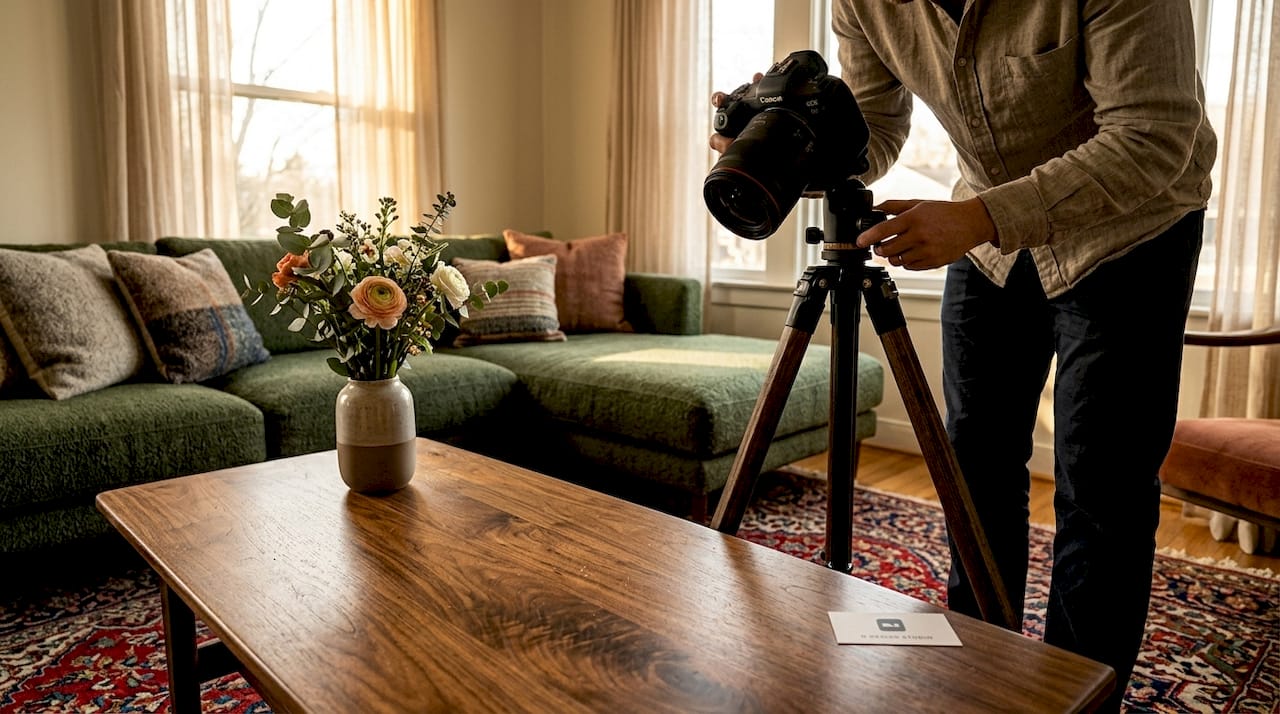
Detail in interior photography is the decisive factor that separates images buyers scroll past from images that stop them cold and drive engagement. Interior designer Summer Thornton states that quality photography showcasing detail is necessary for attracting clients, because potential customers judge craftsmanship directly from photos before ever setting foot in a space. For photographers, interior designers, and real estate professionals, understanding why detail matters in interior photography is not a stylistic preference. It is a business requirement. Publications like Architectural Digest and platforms like Architizer have built entire visual cultures around this principle, and the cognitive science behind viewer attention confirms it.
Why detail matters in interior photography: the visual science
Detail in interior photography works because the human visual system is wired to seek it out. Eye-tracking research confirms that low-level visual cues like brightness, texture, and contrast capture viewer focus rapidly, before any conscious decision to look is made. This bottom-up processing means a viewer’s eye moves to a richly textured stone countertop or a sharply lit cabinet junction automatically. The photographer who understands this controls where attention lands.
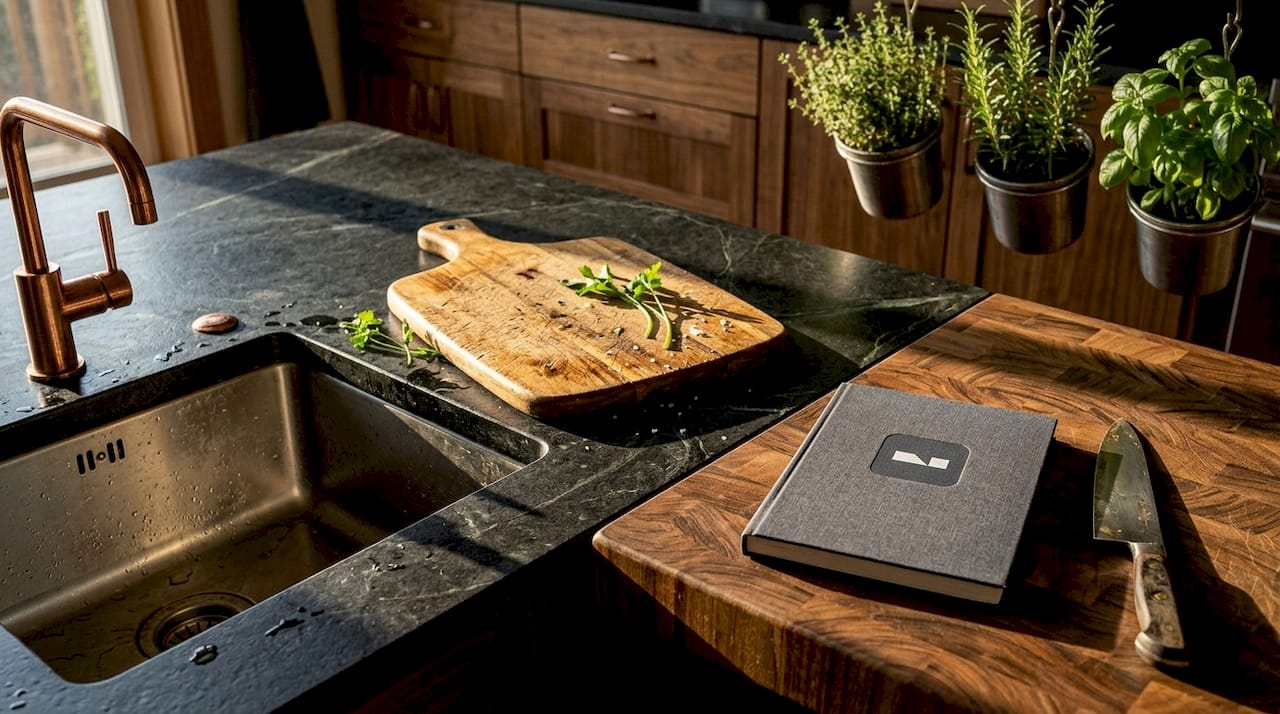
Emotional response follows the same path. When materials render realistically, with visible grain in wood or sheen on polished concrete, viewers form an immediate sense of authenticity. A flat, detail-less image of the same room reads as generic and forgettable. The impact of details in photos on perceived quality is not subtle. It is the primary signal viewers use to assess whether a space is worth their time.
Lighting is the mechanism that makes or breaks this process. Natural light exposes texture in ways that artificial overhead lighting flattens. Shooting toward a window while exposing for highlights reveals the weave of a linen sofa or the brushed finish on metal hardware. Without that light, the same objects become visual noise.
Pro Tip: Shoot detail shots in the hour after sunrise or before sunset when directional light rakes across surfaces at a low angle, making texture pop without harsh shadows.
- Brightness contrast draws the eye to focal points within a frame
- Texture visibility signals material quality and craftsmanship
- Color contrast between surfaces helps viewers parse spatial boundaries
- Realistic rendering of finishes increases emotional connection to a space
How detail builds credibility in property marketing
Buyers decide to engage with property photos within 1 to 3 seconds of seeing a hero image. That number means a single poorly detailed shot can end a buyer’s interest before they reach the floor plan. The implication for real estate professionals is direct: every image in a listing must carry informational weight.
Accurate detail reduces confusion about room layout and flow. When a photo clearly shows how a kitchen island meets the countertop, or how a built-in bookcase transitions to the adjacent wall, buyers build a mental spatial map of the property. Logical photo sequencing with clear detail presentation supports this map-building and reduces the uncertainty that kills purchase confidence.
Interior design photography that balances beauty with factual precision earns a different kind of trust than purely styled shots. A designer presenting work to a prospective client needs images that prove execution quality, not just concept appeal. The details that matter most in this context include:
- Material transitions at junctions, such as where tile meets hardwood flooring
- Hardware quality on cabinetry, doors, and fixtures
- Built-in storage solutions showing depth and construction
- Appliance integration and finish consistency across a kitchen or bathroom
- Lighting fixture installation and trim detail
The table below shows how detail-oriented images compare to generic shots across key marketing metrics.
| Image type | Marketing impact |
|---|---|
| Wide room shot, no detail | Establishes scale but builds no material trust |
| Detail shot of hardware and finishes | Signals craftsmanship and justifies price point |
| Sequenced room-to-detail flow | Builds spatial understanding and buyer confidence |
| Styled vignette without context | Decorative but adds no decision-making value |
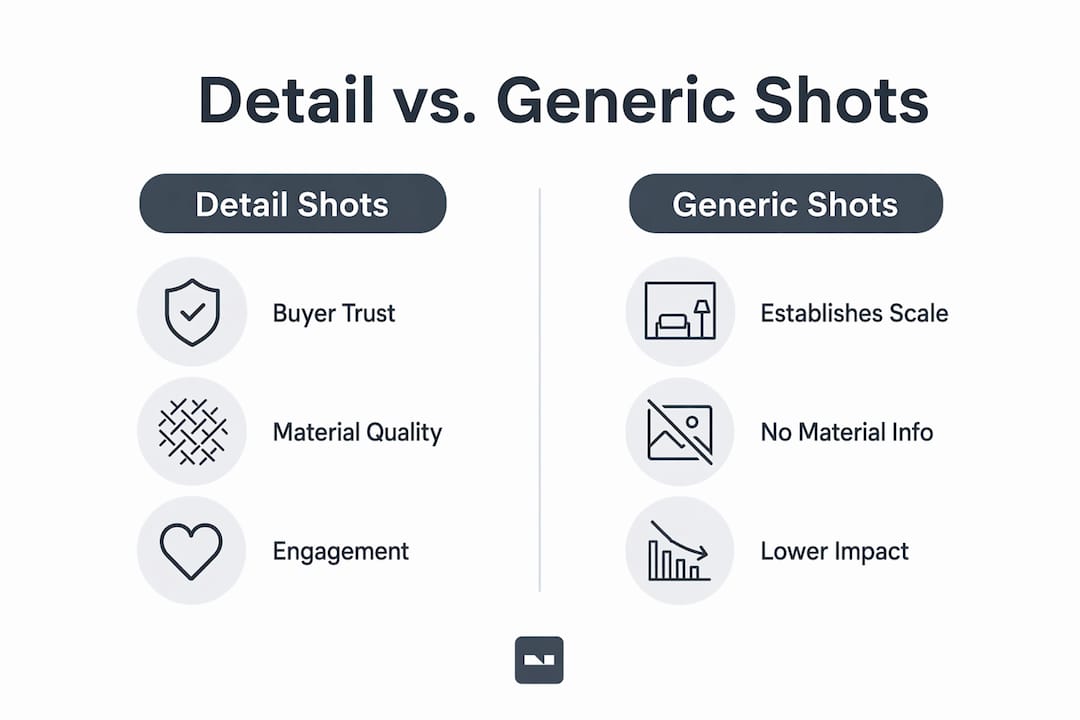
Clients relate detailed photography to trustworthiness and professional care. This is not anecdotal. It is a documented pattern in how visual marketing outcomes shift when image quality improves.
Detail shots vs. filler shots: what actually moves buyers
Not every close-up qualifies as a meaningful detail shot. The distinction between a valuable detail and a filler close-up comes down to one question: does this image answer a buyer’s uncertainty? Detail shots should highlight standout features and contribute to decision-making about quality and usability, not simply fill a photo gallery with texture for texture’s sake.
The Architizer Vision Awards guide makes this point with precision. Composition must be self-justifying without relying on wider context, meaning a detail shot must tell its own story and establish a clear visual hierarchy. A photo of a cabinet pull against a painted surface communicates finish quality, scale, and design intent simultaneously. A blurry close-up of a throw pillow communicates nothing useful.
| Shot type | Buyer value | When to include |
|---|---|---|
| Cabinet hardware and finish | High: signals quality and style | Always in kitchen and bath |
| Material junction (tile to wood) | High: confirms craftsmanship | Renovation or custom builds |
| Styled accessory close-up | Low: decorative only | Rarely, only if design-defining |
| Appliance integration detail | High: answers usability questions | Kitchen and laundry rooms |
| Generic texture fill shot | None: no decision value | Never |
Composition and lighting choices determine whether a detail reads as legible or cluttered. A shallow depth of field isolates the subject and removes background distraction. A single, directional light source creates the shadow depth that makes a three-dimensional surface read as three-dimensional on a flat screen. Without these choices, even a genuinely interesting detail becomes visually inert.
Pro Tip: Before shooting a detail, ask yourself what buyer question this image answers. If you cannot name the question, skip the shot.
Practical interior photography tips to capture compelling detail
Capturing detail effectively requires specific decisions at every stage: before the shoot, during capture, and in post-processing. The following practices are used by photographers working at the level of Architectural Digest features and Architizer award submissions.
- Use natural light as your primary source. Turning off artificial lighting and exposing for highlights produces truer color accuracy and reveals material texture that mixed lighting obscures.
- Shoot from angles that expose junctions. A 30-degree angle to a surface rather than straight-on creates the shadow depth that makes texture visible. This applies to countertops, flooring, and wall finishes equally.
- Use your camera’s grid lines. Aligning architectural lines with the grid prevents keystoning and keeps material transitions readable across the full frame.
- Apply selective focus deliberately. A wide aperture (f/2.8 to f/4) isolates a detail subject. A narrow aperture (f/8 to f/11) keeps an entire surface sharp when material consistency is the story.
- Edit with Adobe Lightroom or VSCO for sharpness and clarity. Sharpening and exposure adjustments in post-processing boost detail visibility without introducing noise, provided the base exposure is correct.
- Avoid over-processing. Excessive clarity or texture sliders in Lightroom create an artificial, HDR-like quality that undermines the authenticity detail shots are meant to convey.
For lighting adjustments that enhance texture, the relationship between light angle and surface grain is the single most controllable variable in the field. Mastering it separates photographers who document interiors from those who interpret them.
Key takeaways
Detail in interior photography directly determines whether images build buyer trust, communicate material quality, and drive marketing outcomes for designers, photographers, and real estate professionals.
| Point | Details |
|---|---|
| Detail drives buyer engagement | Buyers decide within 1 to 3 seconds, making every detail shot a trust signal. |
| Visual science supports detail focus | Eye-tracking confirms texture and contrast capture attention before conscious processing. |
| Credibility requires factual precision | Accurate material and junction shots reduce buyer confusion and build spatial confidence. |
| Not all close-ups add value | Only detail shots that answer buyer questions about quality and usability belong in a listing. |
| Editing amplifies but does not replace capture | Adobe Lightroom and VSCO sharpen detail effectively, but correct light at capture is non-negotiable. |
The detail that most photographers still underestimate
Most photographers treat detail shots as supporting content, something to fill the gaps between hero wide-angle images. That framing is wrong, and it costs clients real money. In my experience working across real estate listings and interior design portfolios, the detail shot is often the image that closes the deal or loses it.
The cognitive science is not abstract here. When a buyer sees a close-up of a perfectly fitted cabinet junction or a beautifully integrated appliance panel, they are not just seeing a nice photo. They are receiving a signal that the people who built this space cared about precision. That signal transfers directly to the asking price’s credibility. Ignore it, and even a stunning wide shot of a kitchen feels unsubstantiated.
The photographers and designers I respect most treat detail as a primary subject, not an afterthought. They plan detail shots the way a journalist plans quotes: each one must carry a specific piece of information that the wider narrative cannot convey alone. Winning architectural photography, as Architizer’s Vision Awards guide makes clear, is built on interpretational storytelling through detail rather than technical perfection in wide shots.
Technology like AI editing tools can enhance what you capture, but they cannot manufacture detail that was never there. The artistic decision to get close, to find the right angle, to wait for the right light, that remains entirely human. Treat it that way.
— Hello
Enhance your interior photos with Vibemyflat

Vibemyflat’s AI photo editor is built specifically for the professionals reading this article. After you capture the detail shots that matter, Vibemyflat processes them in under 30 seconds, enhancing texture clarity, correcting light balance, and preserving the natural color accuracy that makes materials read as authentic. For real estate agents managing high-volume listings or interior designers preparing portfolio submissions, that speed and consistency changes what is possible in a single workday. The platform works across iOS, Android, and web, so your editing workflow fits your shoot schedule. Try the AI editor and see how much stronger your detail shots perform in listings and client presentations.
FAQ
Why do detail shots matter more than wide-angle shots?
Detail shots answer specific buyer questions about material quality, craftsmanship, and usability that wide-angle images cannot address. Both shot types are necessary, but detail shots carry the trust signals that justify price and drive decisions.
How does lighting affect detail visibility in interior photos?
Natural light at a low angle rakes across surfaces and creates the shadow depth that makes texture visible. Mixed or overhead artificial lighting flattens surfaces and reduces the material information a viewer receives.
What details should always be photographed in a property listing?
Hardware, material junctions, built-in storage, appliance integration, and lighting fixture trim are the details that most directly answer buyer questions about construction quality and design execution.
How do I avoid filler close-ups in interior photography?
Before shooting any detail, identify the specific buyer question it answers. If the shot communicates nothing about quality, usability, or material character, it does not belong in the final edit.
Can editing software replace good detail capture in the field?
No. Tools like Adobe Lightroom and VSCO sharpen and clarify detail effectively, but they require a correctly exposed, sharply focused base image. Post-processing amplifies what exists at capture. It does not create detail that was missed.