Discover 15 Interior Design Styles to Transform Your Home
Discover 15 Interior Design Styles to Transform Your Home
TL;DR:
- Choosing an interior design style involves considering room purpose, lighting, budget, and personal objects.
- Popular styles include Modern, Traditional, Bohemian, Minimalist, Coastal, Japandi, and Art Deco.
- Blending styles with a dominant anchor, accents, and personal touches creates a cohesive, personalized space.
Picking an interior design style feels simple until you realize there are over a dozen major styles to choose from, each with its own rules, materials, and mood. Modern or Traditional? Japandi or Bohemian? The options multiply fast, and without a clear framework, it’s easy to freeze up or end up with a room that feels off. This guide cuts through the noise. You’ll get plain-language definitions for 15 core styles, a side-by-side comparison table, and practical advice on mixing styles to create a space that actually feels like yours.
Table of Contents
- How to evaluate and choose an interior design style
- Overview of 15 popular interior design styles
- Side-by-side comparison: Features of key styles
- When to mix, match, or break the rules
- Why your space deserves a custom approach
- Take the next step in transforming your space
- Frequently asked questions
Key Takeaways
| Point | Details |
|---|---|
| Major style categories | There are 15 core interior design styles, each with distinct features and moods. |
| Decision criteria | Your needs, lifestyle, and existing space should guide which style you choose. |
| Mixing is fine | Blending styles or personalizing common templates is often the best approach. |
| Tables make it easy | Comparison tables help you spot similarities and differences fast. |
How to evaluate and choose an interior design style
Before you fall in love with a style on Pinterest, it helps to run it through a few real-world filters. Homeowners often blend trends with functional needs and budget when exploring interior redesign, and that balance matters more than picking the “right” aesthetic.
Here are six criteria to guide your decision:
- Room purpose and daily use. A home office needs focus and calm. A family living room needs durability. Let the function lead.
- Lighting and color preferences. Some styles thrive in bright, airy rooms. Others need moody, layered light. Know what your space naturally offers.
- Maintenance and practicality. Linen slipcovers look gorgeous in a Coastal room but require constant washing. Honest self-assessment saves regret.
- Budget and DIY potential. Industrial style can be achieved affordably with salvaged materials. Art Deco usually demands a bigger investment.
- Personal objects that must fit in. Grandma’s antique armoire might clash with strict Minimalism. Factor in what you already own and love.
- How trends influence long-term satisfaction. A style that feels trendy today may feel dated in five years. Timeless styles like Traditional or Transitional tend to age better.
Once you’ve answered these questions, you’ll have a shortlist of two or three styles worth exploring further. Tools like AI design ideas for interiors can help you visualize options before committing, and solid renovation planning tips keep the process organized and on budget.
Pro Tip: Create a simple mood board with at least 20 images before deciding. If one style keeps showing up, that’s your answer.
Overview of 15 popular interior design styles
With your criteria in mind, let’s break down what makes each style stand out. According to Architectural Digest, these 15 styles represent the most popular directions in interior design today.
- Modern: Clean lines, neutral palette, minimal ornamentation. Form always follows function.
- Contemporary: Fluid and current. Borrows from multiple styles but stays fresh and uncluttered.
- Minimalist: Less is more. Every object earns its place. Calm, intentional, and serene.
- Scandinavian: Warm neutrals, natural wood, cozy textures. Comfort and simplicity in equal measure.
- Transitional: The sweet spot between Traditional and Modern. Familiar but updated.
- Traditional: Symmetry, rich colors, ornate details, and classic furniture silhouettes.
- Mid-Century Modern: 1950s and 60s influence. Organic shapes, tapered legs, bold accent colors.
- Bohemian: Layered textiles, global patterns, plants, and a carefree spirit.
- Eclectic: Thoughtfully curated mix of periods and styles. Structured, not chaotic.
- Industrial: Exposed brick, metal pipes, raw concrete, and warehouse-inspired open spaces.
- Coastal: Light blues, sandy neutrals, natural fibers, and breezy open layouts.
- Farmhouse: Shiplap, reclaimed wood, apron sinks, and a warm, welcoming feel.
- Japandi: A fusion of Japanese minimalism and Scandinavian warmth. Earthy, quiet, and refined.
- Art Deco: Bold geometry, metallic finishes, rich jewel tones, and glamorous symmetry.
- Rustic: Natural, imperfect materials. Stone, rough wood, and earthy tones that feel grounded.
“The best interior style isn’t the one that looks perfect in a magazine. It’s the one that makes you feel at home the moment you walk through the door.”
Pro Tip: If you’re unsure how a style will look in your actual space, try editing interior photos to preview different aesthetics before buying a single piece of furniture.
Side-by-side comparison: Features of key styles
To make differences clearer, use this comparison table to see style features side by side.
| Style | Key features | Color palette | Typical materials | Ideal space |
|---|---|---|---|---|
| Modern | Clean lines, minimal decor | White, gray, black | Steel, glass, concrete | Open-plan living rooms |
| Traditional | Symmetry, ornate details | Deep navy, burgundy, cream | Wood, velvet, silk | Formal dining rooms |
| Industrial | Exposed brick, raw metal | Gray, rust, black | Brick, steel, concrete | Lofts, studios |
| Farmhouse | Shiplap, vintage accents | White, beige, sage | Reclaimed wood, linen | Kitchens, family rooms |
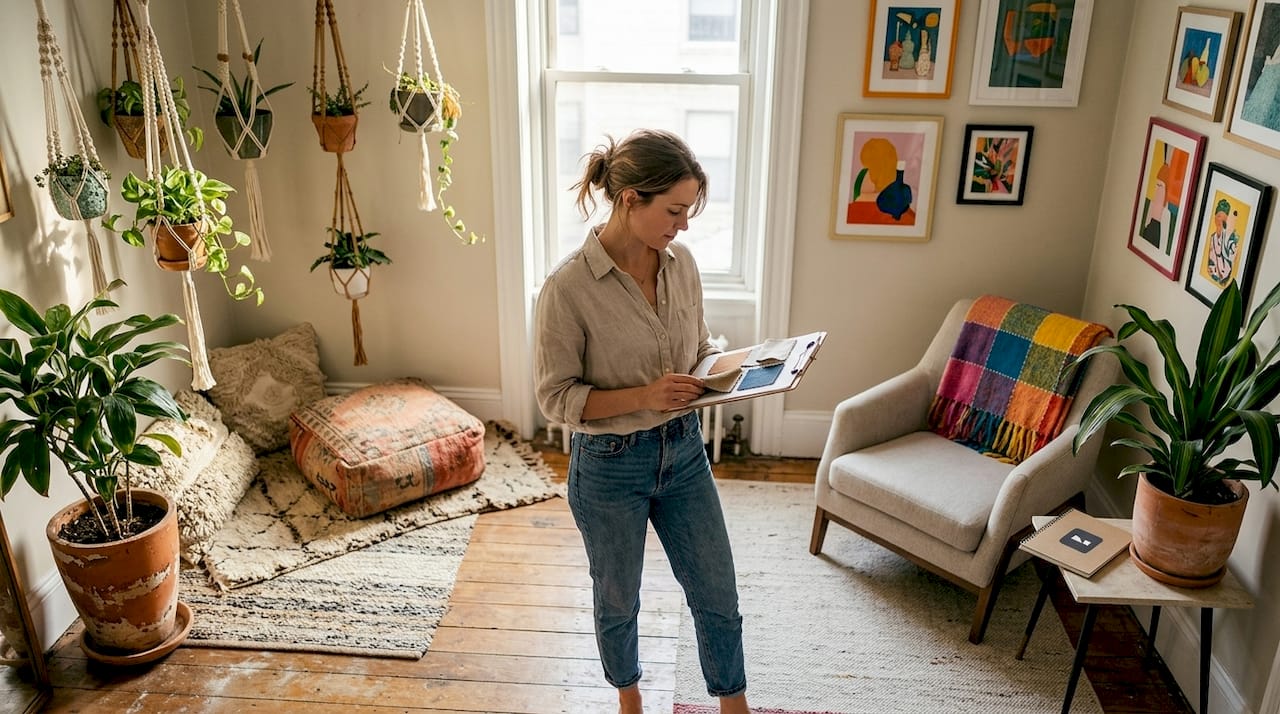
| Bohemian | Layered patterns, global mix | Jewel tones, earthy hues | Rattan, macrame, textiles | Bedrooms, studios |
| Minimalist | Functional, uncluttered | White, off-white, beige | Wood, stone, linen | Any room, especially small |
| Coastal | Breezy, light-filled | Blue, white, sandy tan | Jute, driftwood, cotton | Bathrooms, living rooms |
| Art Deco | Bold geometry, glamour | Gold, black, emerald | Marble, brass, lacquer | Entryways, living rooms |
One thing worth noting: Bohemian and Eclectic styles are often confused, but they’re distinct. Bohemian is driven by feeling and freedom. Eclectic is driven by deliberate curation. Both mix things, but Eclectic has more structure and intention behind every choice.
Art Deco is seeing a strong revival in 2026, especially in entryways and accent walls. Its bold geometry and metallic finishes photograph beautifully, which makes it a popular choice for homeowners who want a dramatic first impression. For lighting tips for minimalist spaces, the approach is completely different: soft, diffused light that disappears into the room rather than becoming a focal point.
When to mix, match, or break the rules
After reviewing the main styles, you might wonder if you need to choose just one. You don’t. In fact, some of the most satisfying homes are built on intentional style blending.
Eclectic design works because it’s curated, not random. It differs from Bohemian by relying on structure and a clear visual thread. Similarly, Rustic style gains new energy when paired with Modern elements, softening the rawness without losing its warmth.
Here are three steps to blend styles successfully:
- Anchor with one dominant style. Pick one style to carry about 70% of the room. This becomes your foundation and prevents visual chaos.
- Introduce a secondary style through accents. Use a second style in textiles, lighting, or a single statement piece. Keep it to around 20% of the room’s visual weight.
- Reserve 10% for personal touches. This is where your personality lives. A vintage lamp, a travel souvenir, or a bold art piece. These details make a room feel lived-in and real.
Compatible pairings that work well together include Scandinavian and Minimalist, Farmhouse and Rustic, and Transitional with almost anything. Avoid pairing styles with opposing energy, like Industrial and Coastal, unless you have a very specific vision and strong design confidence.
Pro Tip: Use a consistent color in every element you add from a secondary style. It creates cohesion even when the shapes and materials are different. Explore tips for eclectic and transitional spaces to keep your mix feeling intentional.
Why your space deserves a custom approach
Here’s something most design guides won’t tell you: matching a style exactly from a magazine is actually a trap. Professionally styled rooms are designed for photography, not for living. They’re stripped of the things that make a home feel real.
The spaces people remember and love are almost always a personal blend. Someone who grew up near the coast but now lives in a city loft might layer Coastal warmth over an Industrial shell. That combination won’t appear in any style guide, but it will feel deeply right to the person who lives there.
Starting with personal comfort rather than pure aesthetics is not a compromise. It’s the smarter strategy. Once you know what makes you feel at ease, you can layer in visual interest from any style that appeals to you.
Digital tools make this much easier now. AI for visualizing design ideas lets you preview how different combinations look in your actual space before spending a dollar. That removes a huge amount of risk and makes experimentation feel exciting rather than stressful.
Take the next step in transforming your space
You now have a clear picture of 15 interior design styles, a comparison framework, and permission to mix things up. The next step is seeing what your ideas actually look like in your home.
VibeMyFlat makes that possible in under 30 seconds. Describe the changes you want in plain language, and the AI renders a realistic preview of your space with updated colors, furniture, or lighting. Whether you’re leaning toward Japandi calm or Art Deco drama, you can test it before committing. Visit VibeMyFlat to explore curated style inspiration, try the AI photo editor, and connect with a community of homeowners who are transforming their spaces one room at a time.
Frequently asked questions
How do I identify my preferred interior design style?
Start by saving images that appeal to you, then look for recurring colors, materials, and moods. Homeowners often blend trends with functional needs, so let your lifestyle guide the final choice.
Can I combine two or more design styles in my home?
Yes, blending complementary styles is very common. Use a consistent color or material to tie them together. Eclectic design is built entirely on this principle, using structure to keep the mix cohesive.
What is the main difference between Bohemian and Eclectic styles?
Bohemian style is relaxed, free-spirited, and layered with global textures. Eclectic style is a more deliberate and structured mix of periods and influences, shaped intentionally over time.
Which interior design style works best for small spaces?
Minimalist, Scandinavian, and Japandi styles are ideal for small rooms because they prioritize light colors, simple lines, and functional layouts. Minimalist and Scandinavian styles emphasize simplicity and space-saving functionality above all else.