Home Staging Inspiration List: Sell Faster in 2026
Home Staging Inspiration List: Sell Faster in 2026
TL;DR:
- Decluttering, cleaning, and depersonalizing are essential foundational steps to maximize a home’s appeal to buyers. Prioritizing high-impact rooms and strategic lighting upgrades can significantly increase the property’s visual attractiveness. Virtual staging with proper disclosure offers a cost-effective way to enhance listing photos and attract more interest.
A home staging inspiration list is a curated set of strategic, practical ideas that help sellers showcase their property to attract buyers by reducing imagination friction and emphasizing key selling points. Professional stagers call this discipline “property presentation,” and it covers everything from decluttering and deep cleaning to furniture arrangement and lighting upgrades. According to NAR’s 2025 data, 83% of buyers’ agents say staging helps buyers visualize the home as their own. That single statistic explains why staging is one of the highest-return activities a seller can do before listing. The ideas below are organized by impact and budget so you can build your own plan fast.
1. Your home staging inspiration list starts with decluttering
Decluttering is the single highest-return action on any staging list. It costs nothing but time, and it makes every other staging effort more effective. Removing excess furniture and personal items opens up floor space, makes rooms feel larger, and lets buyers mentally move their own belongings in.

Start room by room. Pull out anything that does not serve the room’s primary function. Closets, countertops, and shelves are the three areas buyers inspect most closely. A packed closet signals storage problems. A clear countertop signals a clean, organized life.
Pro Tip: Rent a short-term storage unit for the listing period. Moving boxes to a garage or basement still creates visual clutter. Off-site storage removes the problem entirely.
2. Deep cleaning signals care and quality to buyers
A spotless home communicates that the seller has maintained the property well. Buyers read cleanliness as a proxy for how well the home has been cared for overall. Grout lines, baseboards, window tracks, and light fixtures are the details that separate a clean home from a truly impressive one.
Hire a professional cleaning crew for the initial deep clean, then maintain it yourself during the listing period. Pay special attention to kitchens and bathrooms. These two rooms carry the most emotional weight in a buyer’s decision and are the first places buyers look for signs of neglect. For a full room-by-room preparation checklist, the home design checklist from Vibemyflat covers every space systematically.
3. Depersonalizing opens the home to every buyer
Packing away personal items such as family photos, religious objects, and personalized art is one of the most effective and most overlooked staging actions. The goal is to create a neutral canvas where any buyer can picture their own life unfolding. A home covered in someone else’s memories is harder to fall in love with.
Replace personal photos with simple abstract art or landscape prints. Swap out novelty items and collections for a few well-placed neutral decorative objects. The result is a space that feels welcoming to the widest possible buyer pool, which is exactly what drives competitive offers.
4. Rearranging furniture to improve flow and function
Furniture placement controls how buyers move through a space and how large each room feels. Most sellers have furniture arranged for daily living, not for showing. These two goals are often in direct conflict. Showing furniture should highlight the room’s purpose, create clear pathways, and draw attention to architectural features like fireplaces or large windows.
Pull furniture away from walls. Floating a sofa a few inches into the room creates a more intentional, designed look. Remove any piece that blocks natural light or interrupts the path from the doorway to the room’s focal point. In living rooms, arrange seating to face each other rather than pointing at a television. This signals conversation and connection, which buyers respond to emotionally.
5. Neutralizing colors and textiles for broad appeal
Bold wall colors and heavily patterned textiles narrow your buyer pool. A deep burgundy dining room or a bright orange accent wall may reflect the seller’s personality perfectly, but it forces buyers to mentally repaint before they can picture themselves there. Strategic paint choices in warm whites, soft greiges, and light taupes consistently outperform bold colors in staged listings.
Swap out patterned throw pillows, curtains, and bedding for solid, neutral versions. Linen, cotton, and wool in natural tones photograph well and feel universally appealing. This is one of the lowest-cost, highest-impact updates on any staging list because paint and soft furnishings are inexpensive to change.
6. Prioritizing rooms by impact and budget
Not every room deserves equal investment. The entryway, kitchen, primary bathroom, and master bedroom are the four rooms that most directly influence buyer decisions. Staging resources should flow to these spaces first. Typical staging costs run between 1% and 3% of the home’s selling price, so a $400,000 home might see $4,000 to $12,000 in staging investment.
Here is a quick reference for allocating effort by budget tier:
| Budget tier | Best staging actions |
|---|---|
| Under $500 | Declutter, deep clean, rearrange furniture, add fresh flowers |
| $500 to $2,000 | Paint neutral walls, update light fixtures, add new bedding and towels |
| $2,000 to $5,000 | Rent key furniture pieces, hire a staging consultant, refresh landscaping |
| $5,000 and above | Full furniture rental, professional photography, virtual staging package |
The average staging spend nationally sits near $1,849, which puts most sellers squarely in the mid-tier range. That budget covers a consultation plus targeted updates to the highest-impact rooms.
Pro Tip: Book a one-hour staging consultation before buying anything new. A professional stager will tell you exactly what to move, remove, or replace. That single hour often saves sellers hundreds of dollars in unnecessary purchases.
7. Upgrading lighting for immediate visual impact
Lighting is the most underrated item on any home staging strategies list. Dark rooms feel smaller and less inviting in person and photograph poorly online, where most buyers form their first impression. Natural light enhancement through clean windows, removed heavy drapes, and strategically placed mirrors is free and immediately effective.
For artificial lighting, replace any bulb below 2,700 to 3,000 Kelvin with a warm white LED. Add floor lamps to dark corners. Swap dated brass or chrome fixtures for matte black or brushed nickel options, which photograph cleanly and read as current. The guide to layered lighting from Vibemyflat breaks down ambient, task, and accent lighting in practical terms for every room type.
8. Using plants and natural elements strategically
A single well-placed plant does more for a room’s atmosphere than most decorative accessories. Plants signal life, freshness, and care. A fiddle-leaf fig in a living room corner, a pothos on a kitchen shelf, or a small succulent arrangement on a bathroom vanity each add organic texture without demanding attention.
Avoid overdoing it. Three to five plants in a standard-sized home is the right range. Choose low-maintenance varieties that will stay healthy during the listing period. Dried botanicals and natural wood accents serve a similar purpose in rooms where live plants are impractical.
9. Styling shelves and built-ins to show character
Built-in shelves are a selling feature, but only when they are styled well. Overstuffed shelves read as clutter. Empty shelves read as sterile. The goal is a curated arrangement that suggests personality without overwhelming the eye.
Use the rule of three: group objects in odd numbers, vary heights, and mix textures. A stack of books, a small ceramic object, and a trailing plant create visual interest without noise. Remove anything branded, overly personal, or thematically specific. Buyers should see possibility, not someone else’s story.
10. Transforming unused spaces for buyer imagination
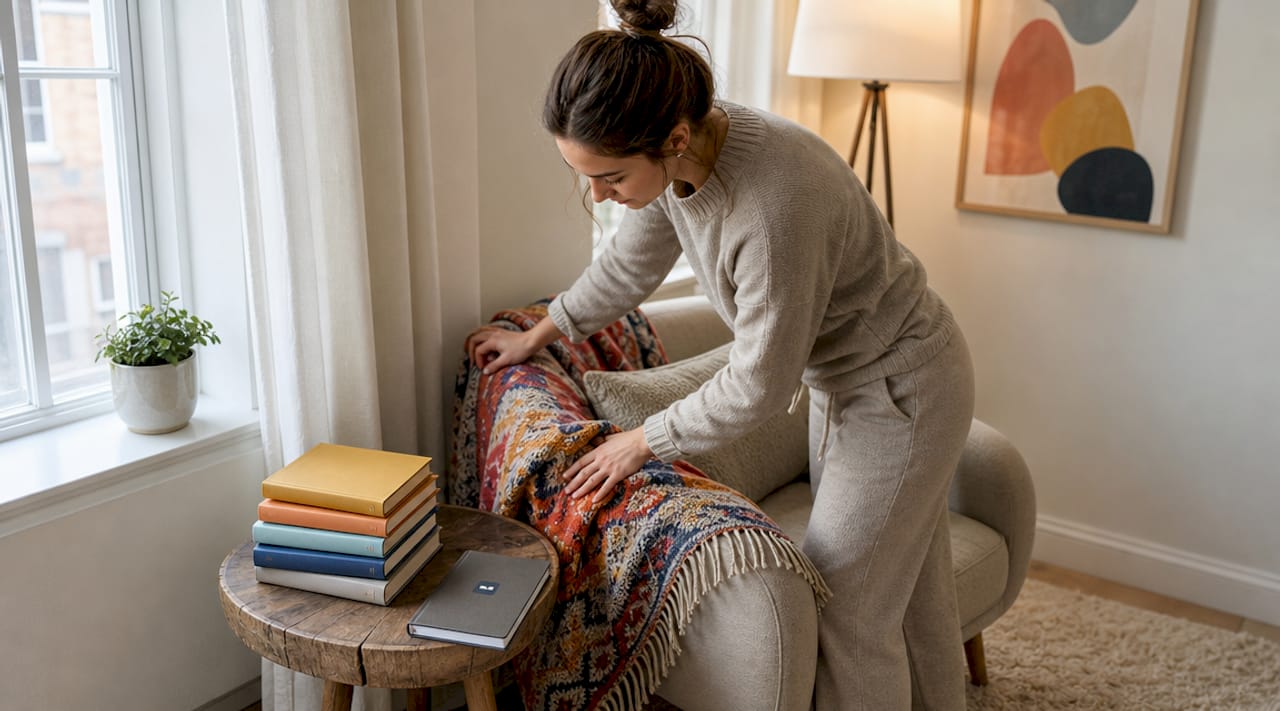
An unused corner, an awkward alcove, or a spare room without clear purpose creates confusion for buyers. Confusion slows decisions. Give every space a defined function, even a simple one. A corner with a chair, a small table, and a lamp becomes a reading nook. A spare bedroom with a desk and a bookshelf becomes a home office.
This is one of the most creative areas of interior design inspiration for sellers. You do not need to spend much. A $150 investment in a secondhand chair and a lamp can transform a dead corner into a feature buyers mention in their offer notes.
11. Adding curb appeal to anchor the first impression
Buyers form their first impression before they walk through the door. Curb appeal work includes mowing the lawn, trimming hedges, power washing the driveway, painting the front door, and replacing any worn house numbers or exterior light fixtures. These actions cost between $50 and $500 and directly affect how buyers feel as they approach the home.
A freshly painted front door in a classic color like navy, black, or deep red signals confidence and care. Add a new doormat and a potted plant on either side of the entrance. The entry sequence sets the emotional tone for the entire showing.
12. Virtual staging as a budget-friendly digital option
Three common staging approaches exist: in-person staging, staging consultations, and virtual staging. Virtual staging uses digital tools to furnish and style photos of empty or sparsely furnished rooms. It costs a fraction of physical furniture rental and produces listing photos that compete with fully staged homes.
The critical rule: virtual staging requires disclosure to buyers. NAR is explicit that digitally altered images must be labeled as such to avoid misleading buyers about the actual condition of the space. Ethical use means showing both the staged and unstaged versions in the listing. Virtual staging works best for vacant homes, investment properties, and sellers with tight budgets who need strong listing photography. For a deeper look at the practical advantages, the virtual home editing guide from Vibemyflat covers the key use cases and tradeoffs.
Key takeaways
Effective home staging combines decluttering, neutralizing, lighting upgrades, and strategic room prioritization to maximize buyer visualization and sale potential.
| Point | Details |
|---|---|
| Declutter and depersonalize first | Remove personal items and excess furniture before spending money on anything else. |
| Focus budget on four key rooms | Entryway, kitchen, primary bathroom, and master bedroom drive the most buyer decisions. |
| Lighting upgrades pay outsized returns | Warm LED bulbs, clean windows, and layered fixtures improve both showings and listing photos. |
| Virtual staging requires disclosure | NAR requires sellers to label digitally altered images to maintain buyer trust. |
| Staging costs 1% to 3% of sale price | Budget accordingly and use a consultation to direct spending to the highest-impact changes. |
What I’ve learned about building a staging list that actually works
Most sellers approach staging backwards. They buy new throw pillows and scented candles before they have decluttered a single shelf. The result is a home that smells nice but still feels like someone else’s space. The sequence matters more than the individual actions.
Start with subtraction, not addition. Every item you remove makes the items that remain more powerful. I have seen homes where removing two pieces of furniture and painting one wall added more perceived value than a $3,000 furniture rental package. Buyers respond to space and light before they respond to style.
The second mistake I see constantly is staging for personal taste instead of buyer psychology. Staging functions like visual merchandising. The goal is to trigger an emotional connection in a stranger, not to express the seller’s identity. Neutral does not mean boring. It means open. It means possibility. A buyer who walks into a neutral, well-lit, uncluttered home fills that space mentally with their own life. That mental act is what drives offers.
On the question of DIY versus professional staging: do the fundamentals yourself, then bring in a professional for a consultation before you spend money on rentals or accessories. A good stager will redirect your budget to where it actually matters. That one-hour investment consistently outperforms guesswork.
— Hello
See your staging ideas come to life before listing
Staging decisions are easier when you can visualize the result before moving a single piece of furniture. Vibemyflat lets you describe changes in plain language and see professional-quality results in under 30 seconds. Whether you want to test a new wall color, swap out furniture, or see how a room looks with better lighting, the platform gives you a clear picture before you commit.

Sellers who combine physical staging with strong listing photography sell faster. Research shows that photo editing for staging can help homes sell 32% faster by presenting spaces at their best. Vibemyflat is available on iOS and Android, and works directly from your browser. Start editing your listing photos today at Vibemyflat and give buyers a first impression that drives showings.
FAQ
What is a home staging inspiration list?
A home staging inspiration list is a curated collection of practical staging actions organized to help sellers improve buyer visualization and property appeal. It typically covers decluttering, cleaning, furniture arrangement, lighting, and curb appeal in priority order.
How much does home staging typically cost?
Typical staging costs average near $1,849 nationally, with full-service staging running between 1% and 3% of the home’s selling price. Budget-conscious sellers can achieve strong results for under $500 by focusing on decluttering, cleaning, and lighting.
Which rooms should I stage first?
Stage the entryway, kitchen, primary bathroom, and master bedroom first. These four rooms carry the most weight in buyer decisions and deliver the highest return on staging investment.
Is virtual staging allowed in real estate listings?
Virtual staging is allowed but requires clear disclosure. NAR specifies that digitally altered listing images must be labeled to avoid misleading buyers about the actual condition of the property.
Can I stage my home without hiring a professional?
Yes. The foundational actions, including decluttering, deep cleaning, depersonalizing, and rearranging furniture, cost nothing and produce significant results. A one-hour professional consultation is worth adding before spending on rentals or accessories to direct your budget effectively.