Why Upgrade Property Photos to Sell Faster in 2026
Why Upgrade Property Photos to Sell Faster in 2026
TL;DR:
- Upgrading property photos with professional images and digital enhancements significantly accelerates sales and boosts online engagement. Virtual staging increases inquiry rates by 84% and helps buyers visualize potential, making listings more appealing and faster to sell. Compliance with disclosure laws like California’s AB 723 is essential, and logical photo sequencing combined with accurate lighting builds buyer confidence online.
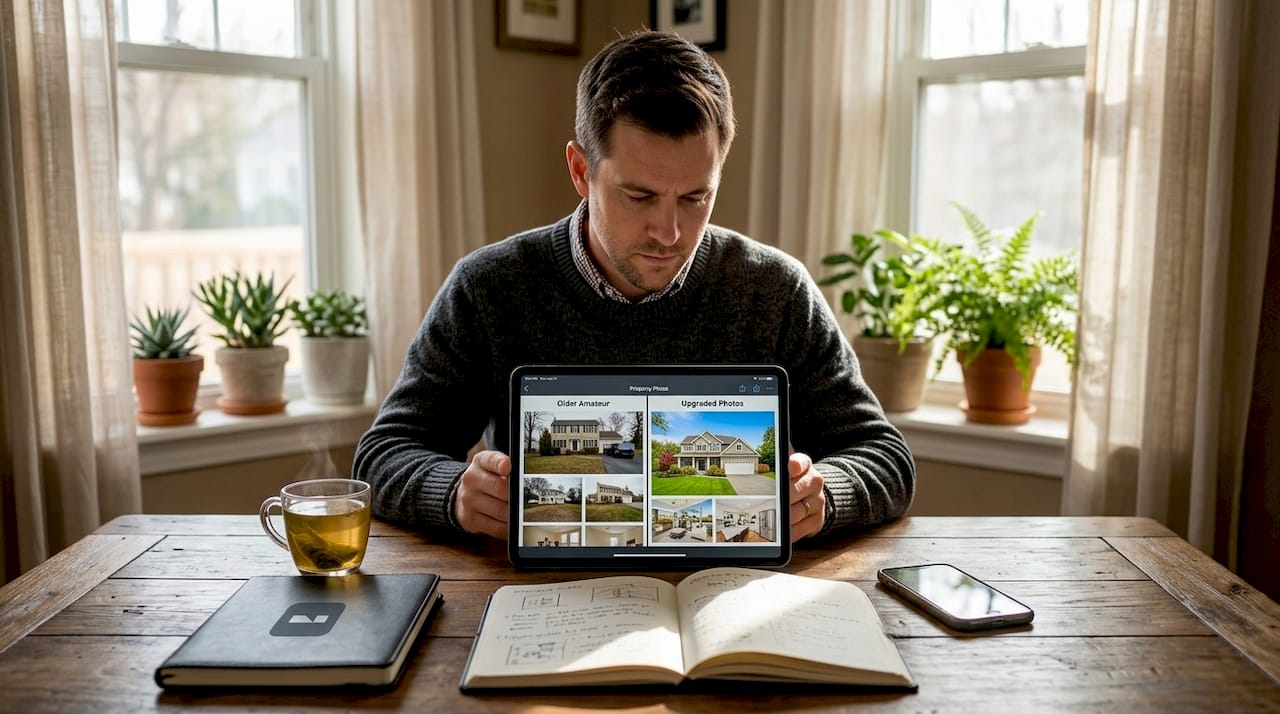
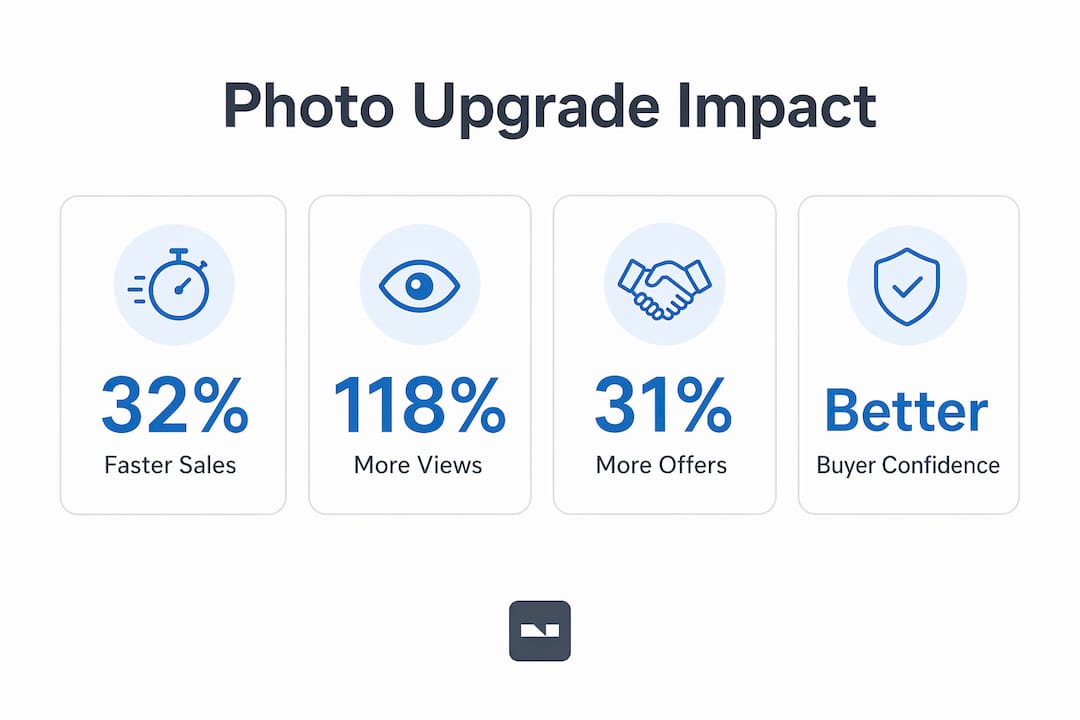
Upgrading property photos means enhancing listing images through professional photography and digital tools to increase a property’s marketability and accelerate sales. Listings with professional photos sell 32% faster and generate 118% more online views than those shot with amateur equipment. That gap in performance is not a minor edge. It is the difference between a listing that sits and one that draws competitive offers within days. For property owners and real estate professionals, understanding why upgrade property photos matters is the first step toward using visuals as a genuine sales tool rather than a formality.
Why upgrade property photos: the core case for professional imagery
Professional real estate photography is not simply about taking better pictures. It is about presenting a property in a way that converts online browsers into in-person visitors. HDR photography balances extreme lighting contrasts in interiors, producing images that reflect how a room actually looks rather than a washed-out or shadowy version of it. This accuracy matters because buyers form their first impression of a property within seconds of seeing the thumbnail.
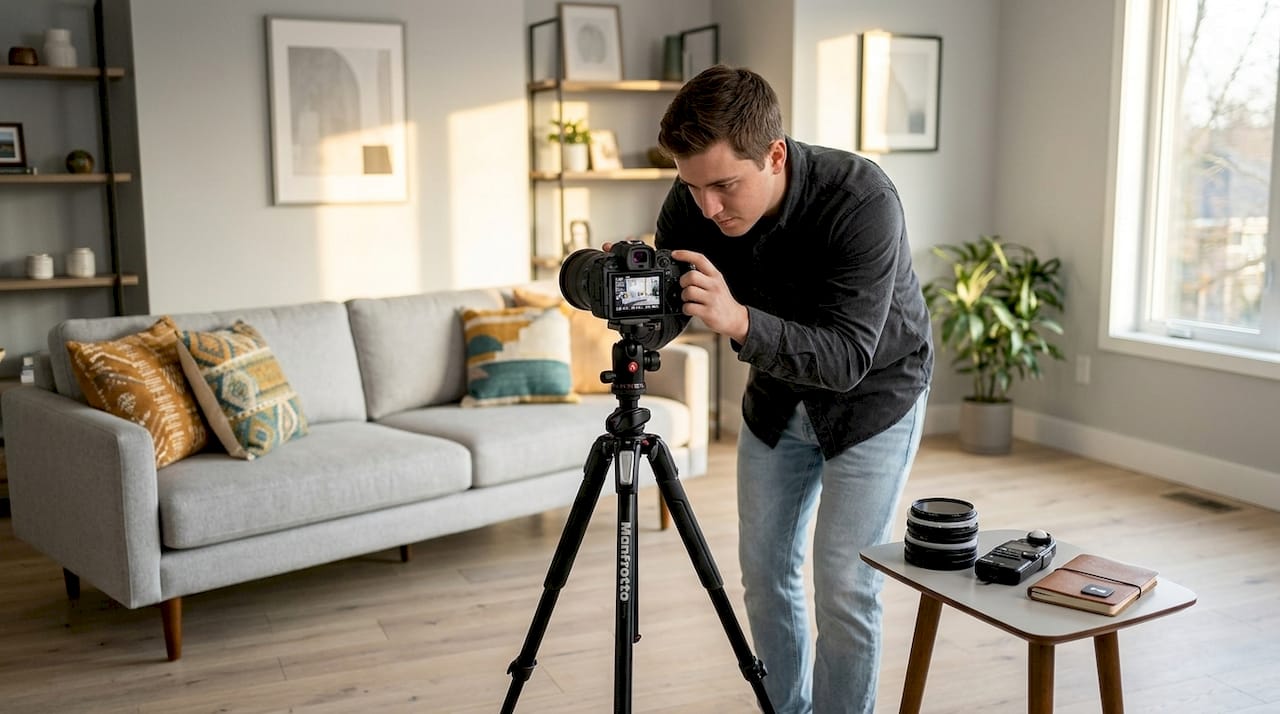
The performance data behind professional real estate media is specific. Homes with professional photography generate significantly more inquiries, and aerial drone shots and video tours attract more out-of-state buyers who cannot visit in person. For a property in a competitive market, that expanded reach directly translates to more offers and stronger negotiating leverage.
| Metric | Amateur photos | Professional photos |
|---|---|---|
| Online views | Baseline | 118% more |
| Days on market | Baseline | ~32% faster sale |
| Out-of-state buyer reach | Limited | Significantly higher |
| Buyer inquiry rate | Low | Substantially increased |
The benefits of upgraded property photos compound across the entire sales cycle. More views generate more inquiries. More inquiries create more showings. More showings produce more offers. A single investment in professional photography and digital enhancement touches every stage of that chain.
Pro Tip: Shoot on an overcast day when possible. Diffused natural light reduces harsh shadows and produces more accurate interior colors without heavy post-processing.
The importance of quality real estate photos also extends to how listings rank and display on platforms like Zillow and Realtor.com. Listings with more images and higher-resolution photos receive preferential placement in search results, which means the photography investment pays off before a single buyer even clicks through.
How virtual staging and digital enhancements drive buyer engagement
Virtual staging is the practice of digitally furnishing and decorating an empty or poorly furnished property to show its potential. It is not the same as physical staging, and the distinction matters for both cost and speed. Virtually staged listings generate 84% more online engagement and 3.2 times more qualified buyer inquiries compared to unstaged listings. Those numbers come from an analysis of 1,847 listings in 2026, making them among the most current and specific benchmarks available.
The practical advantages of virtual staging over physical staging are significant:
- Speed to market. Virtual staging reduces listing preparation from days to hours, capturing buyer interest before competing listings appear.
- Cost efficiency. Physical staging requires furniture rental, movers, and ongoing fees. Virtual staging is a one-time editing cost per photo.
- Design flexibility. You can show the same room in a modern, Scandinavian, or traditional style to appeal to different buyer segments without reshooting.
- Broader appeal. Buyers who struggle to visualize an empty space respond more positively to furnished images, which reduces the mental effort required to picture themselves living there.
Showing multiple design styles through virtual staging can increase offer frequency by 31%, according to 2026 performance data. That figure reflects a real behavioral shift: buyers who see a room styled in a way that matches their taste are more likely to schedule a showing and submit an offer.
Pro Tip: When shooting for virtual staging, keep rooms empty and shoot from corners at a consistent height of about 5 feet. This gives the editing team the cleanest possible base image and produces the most realistic final result.
The goal of enhancing property images through virtual staging is not to deceive buyers. It is to help them understand what a space can become. Ethical practice requires clear labeling of staged images, which connects directly to the compliance requirements covered in the next section.
What compliance rules apply to digitally altered listing photos
California’s AB 723, effective January 1, 2026, is the most specific legal framework currently governing digitally altered real estate listing photos in the United States. Under this law, significantly altered listing photos require disclosure and must be shown adjacent to the original unaltered images with clear labeling. The CRMLS and Inman have both published detailed guidance on how this applies in practice.
The law draws a clear line between routine edits and material alterations:
- Permitted without disclosure: Brightness adjustment, sharpness correction, color balance, and exposure fixes. Routine photo edits do not require disclosure because they do not materially change the depiction of the property.
- Requires disclosure: Virtual staging, object removal, structural changes, sky replacement, and any edit that alters what physically exists in the property.
- Consequences of non-compliance: Regulatory discipline, MLS violations, and potential legal liability from buyers who claim they were misled.
“Photo enhancement compliance is defined by whether edits materially change property appearance. Transparency builds buyer trust and mitigates legal risk.” — CRMLS Knowledgebase
One practical implication that many agents overlook is that complying with AB 723 may require redesigning your entire MLS photo sequence rather than simply swapping files. If you have ten virtually staged images, each one needs an adjacent original. That changes how you structure your gallery from the start, not as an afterthought. Planning your photo shoot and editing workflow with compliance in mind from day one prevents costly revisions later.
For agents operating outside California, AB 723 still sets a useful benchmark. Buyers everywhere respond better to transparent listings, and the disclosure practice it mandates is good professional habit regardless of jurisdiction.
How photo sequencing and lighting build buyer confidence
Photo sequencing is the order in which listing images appear in your gallery. Most agents treat it as an afterthought. It is actually product design. A confusing gallery reduces buyer comprehension and the quality of inquiries, because buyers who cannot mentally map a property from its photos are less likely to commit to a showing.
The sequence that works follows the natural path a buyer would take through the property:
- Exterior front view
- Entry or foyer
- Living room
- Kitchen and dining area
- Primary bedroom
- Additional bedrooms
- Bathrooms
- Outdoor spaces and backyard
- Floor plan or aerial view as the final image
A logical image sequence helps buyers build a mental map of the property and increases their confidence to schedule an in-person inspection. This is not a stylistic preference. It is a documented behavioral pattern in how buyers process property listings online.
Lighting accuracy is equally important. Photos that show a room as brighter or darker than it actually is create a mismatch between the online impression and the in-person experience. That mismatch breeds skepticism. Buyers who feel misled by photos are less likely to make offers, even if they like the property. Lighting adjustment tips that match the in-person experience preserve trust throughout the sales process.
Pro Tip: Add a floor plan as the final image in your gallery. Buyers who reach the end of a listing gallery are highly engaged. A floor plan at that point answers their spatial questions and converts interest into action.
The combination of accurate lighting, logical sequencing, and floor plan inclusion transforms a photo gallery from a collection of images into a guided property tour. That shift in how buyers experience the listing online directly affects how many of them take the next step.
Key takeaways
Upgraded property photos are the single highest-leverage marketing investment available to property owners and real estate professionals, combining faster sales, higher engagement, and stronger buyer confidence when executed with accuracy and compliance.
| Point | Details |
|---|---|
| Professional photos accelerate sales | Homes with professional photography sell 32% faster and generate 118% more online views. |
| Virtual staging multiplies engagement | Virtually staged listings produce 84% more online engagement and 3.2x more qualified inquiries. |
| Compliance is non-negotiable in California | AB 723 requires original photos adjacent to digitally altered images with clear labeling from January 2026. |
| Sequencing is a conversion tool | A logical room-by-room photo order helps buyers mentally map the property and commit to showings. |
| Routine edits need no disclosure | Brightness, sharpness, and color correction do not require disclosure under AB 723 or general best practice. |
The uncomfortable truth about property photo upgrades
Most agents know professional photos matter. Very few treat photo strategy with the same rigor they apply to pricing or negotiation. After years of working with real estate media, the pattern is consistent: the listings that underperform are almost never priced wrong. They are visually confusing.
The biggest mistake I see is treating photo upgrades as a cost rather than a conversion mechanism. A $300 photography session on a $600,000 listing is not an expense. It is a rounding error that can move the needle on both sale speed and final price. The agents who resist it are usually the same ones wondering why their listing has 200 views and zero showings.
Virtual staging is where I see the most untapped potential. Agents who use it correctly, with proper disclosure and multiple style options, consistently outperform those who rely on empty-room photography. The 84% engagement lift is not a marketing claim. It is a behavioral reality rooted in how buyers process visual information.
The compliance piece is where I urge the most caution. AB 723 is California-specific today, but the transparency standard it sets will spread. Agents who build disclosure habits now will not be scrambling when their state adopts similar rules. The importance of quality real estate photos is inseparable from the integrity with which those photos are presented.
— Hello
Transform your listings with Vibemyflat

Vibemyflat gives property owners and real estate professionals a direct path to professional-quality listing photos without complex software or lengthy turnaround times. Using AI-driven natural language editing, you describe the changes you want, such as updated wall colors, improved lighting, or virtual furniture, and Vibemyflat delivers results in under 30 seconds. The platform handles virtual staging and photo enhancement for both web and mobile, making it accessible whether you are preparing a single listing or managing a full portfolio. Visit vibemyflat.com to see how fast your next listing can go from shot to market-ready.
FAQ
How much faster do professional photos sell a home?
Professionally photographed homes sell about 32% faster than those with amateur photos, according to Redfin research and aggregated US market data through 2025.
Does virtual staging require disclosure on MLS listings?
Yes. Under California’s AB 723, virtually staged images must be labeled and shown adjacent to the original unaltered photos. Other states do not yet mandate this, but transparent labeling is considered best practice regardless of location.
What photo edits are allowed without disclosure?
Routine adjustments like brightness, sharpness, and color correction do not require disclosure because they do not materially alter the property’s depiction. Edits that add, remove, or change physical features do require disclosure.
What is the best order for real estate listing photos?
Start with the exterior front view, then move through entry, living room, kitchen, bedrooms, bathrooms, and outdoor spaces, finishing with a floor plan. This sequence mirrors how a buyer would tour the property and builds spatial confidence online.
Is virtual staging worth the cost for vacant properties?
Virtually staged listings generate 3.2 times more qualified inquiries and sell 38 days faster than unstaged listings, based on 2026 analysis of 1,847 listings. For vacant properties, the return on that investment is consistently positive.