Why Redesign Rental Photos: Attract Tenants Faster
Why Redesign Rental Photos: Attract Tenants Faster

TL;DR:
- Redesigning rental photos significantly increases tenant inquiries and reduces vacancy periods with minimal investment.
- High-quality, accurate visuals attract better tenants, support higher rent prices, and make listings more trustworthy.
- Using a combination of professional photography and AI editing tools ensures listings stay current, appealing, and competitive in any market.
Redesigning rental photos is the single most cost-effective action a landlord or real estate professional can take to increase tenant inquiries and reduce vacancy time. Photo quality is the first filter every prospective tenant applies, and most make their decision to click or scroll past within 3 seconds of viewing a listing. The gap between a filled unit and an empty one often comes down to whether your photos communicate value before a single word is read. This article breaks down why redesigning rental photos pays off, how to do it right, and what tools and strategies are moving the needle in 2026.
Why redesign rental photos: the case for better visuals
Photo quality directly controls how many tenants even consider your listing. Tenants scrolling through Zillow, Apartments.com, or Realtor.com are making rapid judgments. A dark, cluttered, or poorly framed photo signals neglect before a tenant ever reads the price or square footage.
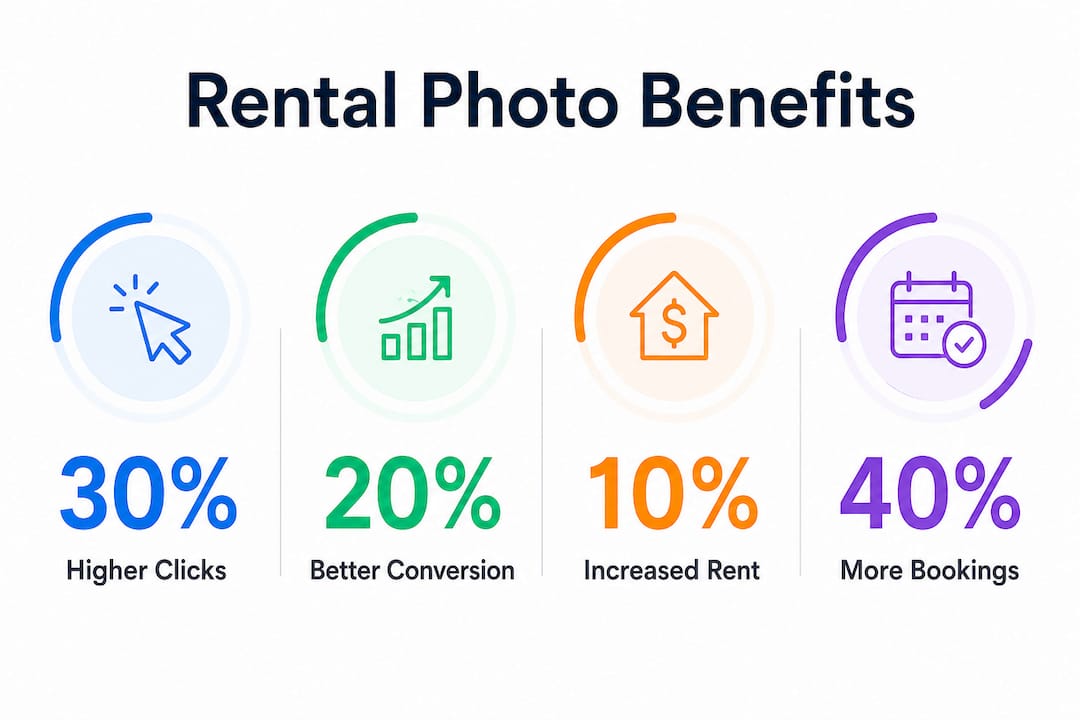
The numbers back this up. Quarterly photo refreshes lift click-through rates by 10–30% and conversion rates by 5–20%. That means a listing that was getting 100 clicks per month could reach 130 clicks with updated photos alone, without changing the price or description.
Professional photography takes the impact further. Professional photos can increase asking rent by about 10% and boost bookings by up to 40% compared to poorly presented listings. A 10% rent increase on a $1,800 per month unit adds $2,160 per year in revenue. That math makes even a $300 photography session a strong investment.
Why poor photos fail so consistently:
- Dim or uneven lighting makes rooms look smaller and uninviting
- Wide-angle distortion creates unrealistic expectations and drives cancellations
- Clutter in the frame signals poor maintenance to prospective tenants
- Inconsistent photo quality across a listing undermines trust in the property manager
- Missing key rooms (kitchen, bathroom, storage) forces tenants to assume the worst
Pro Tip: Shoot every room from a corner at chest height, not eye level. This angle captures more of the floor and ceiling, making rooms appear larger without distorting proportions.
The importance of high-quality rental images goes beyond aesthetics. Listings with strong visuals signal professional management, which attracts tenants who take their own obligations seriously.
Professional photography vs. DIY: which approach wins?
Both approaches can work. The right choice depends on your budget, property type, and how competitive your local rental market is.
Professional photographers bring calibrated equipment, lighting rigs, and post-processing skills that most landlords cannot replicate with a smartphone. The result is consistent, polished images that hold up across multiple platforms and screen sizes. Professional presentation signals quality management, attracting better tenants and reducing vacancy periods.
DIY photography has improved dramatically with modern smartphones and free editing apps like Snapseed or Adobe Lightroom Mobile. For landlords managing smaller portfolios or properties in lower-rent markets, a well-executed DIY shoot can outperform a careless professional one. The key variables are lighting, staging, and post-processing discipline.
| Factor | Professional Photography | DIY Photography |
|---|---|---|
| Upfront Cost | $150–$500 per session | Near zero (smartphone) |
| Image Quality | Consistently high | Variable, skill-dependent |
| Time Investment | Low for landlord | High (shooting + editing) |
| Best For | Competitive markets, luxury units | Budget properties, quick refreshes |
| Editing Depth | Full post-processing included | Requires separate editing tools |
| AI Enhancement Option | Can be combined | Works well with AI tools |
AI-powered tools like Vibemyflat are changing the calculus here. A landlord can take a decent smartphone photo and use Vibemyflat’s natural language editing to change wall colors, adjust lighting, or digitally stage an empty room in under 30 seconds. This closes much of the quality gap between DIY and professional shoots at a fraction of the cost.
Digital staging effectively communicates room size and layout when done accurately. Empty rooms feel smaller to prospective tenants, and a digitally staged photo with correctly proportioned furniture helps them visualize the space without misrepresenting it.
Pro Tip: Avoid ultra-wide-angle lenses set below 24mm equivalent focal length. The distortion from wide-angle lenses misrepresents space and leads to higher cancellation rates when tenants arrive and find the room smaller than expected.
How to enhance rental photos: strategies that actually work
Effective photo redesign is not a one-time project. It is an ongoing practice tied to market conditions, seasonal demand, and the physical state of your unit.
The top five strategies for stronger rental listing photos:
-
Stage before you shoot. Remove personal items, excess furniture, and anything that dates the space. A clean, neutral room photographs better and appeals to a wider range of tenants. Refer to current 2026 design trends to align your staging with what tenants are searching for.
-
Refresh photos quarterly or seasonally. Airbnb reported 10–30% CTR improvements with coordinated seasonal photo updates. A spring refresh showing natural light and open windows performs differently than a winter shoot with warm interior lighting. Both can work. Neither should be permanent.
-
Write captions that clarify scale and layout. A photo of a bedroom without context leaves tenants guessing. Captions like “12x14 primary bedroom with east-facing windows” answer questions before they become objections. Check out this photo refresh guide for caption strategies tied to specific room types.
-
Show the exact unit, not a model. The era of model unit photos is ending. Tenants now demand transparency with exact unit images to avoid disappointment at viewing. Showing the actual apartment builds trust and pre-qualifies leads.
-
Add a video walkthrough or floor plan. Static photos answer “what does it look like?” Video and floor plans answer “how does it flow?” Listings that combine both formats consistently outperform photo-only listings in time-to-lease metrics.
Pro Tip: Update your listing photos after any maintenance or cosmetic improvement, even minor ones like fresh paint or new fixtures. A photo taken after a $200 paint job can justify a $100 per month rent increase if it shows the unit at its best.
Avoid over-editing. Heavy filters, HDR effects, and color grading that makes a beige wall look white are forms of misrepresentation. Misleading photos cause high cancellation rates and damage your reputation as a landlord or property manager.
Do better photos actually improve tenant quality?
The answer is yes, and the mechanism is more specific than most landlords realize. Strong photos do not just attract more tenants. They attract the right tenants while filtering out poor fits before a single showing.
Accurate, detailed visuals help tenants self-select, with listings reporting only 4% no-show rates when photos and floor plans accurately represent the unit. That figure is significant. A landlord running 10 viewings per week with a 20% no-show rate wastes two hours per week on empty appointments. Accurate photos cut that waste by 80%.
Photos also function as a marketing contract. When a tenant shows up to a viewing and the space matches what they saw online, trust is established immediately. That trust accelerates the decision to sign a lease.
“The goal of rental photography is not decoration but to sell a lifestyle that helps tenants envision living in the space.” — The Invisible Vacancy
The lifestyle dimension matters more than it did five years ago. Tenant expectations have been shaped by a decade of high-quality social media content. Platforms like Instagram and Pinterest have trained renters to expect aspirational, clean, and lifestyle-oriented imagery from every product they consider, including apartments. A listing that looks like a casual snapshot sits below that expectation threshold, regardless of the property’s actual quality.
Benefits of rental photo updates extend beyond click-through rates:
- Faster time-to-lease reduces carrying costs and mortgage exposure
- Better tenant self-selection means fewer mismatched viewings
- Higher perceived value supports stronger rent pricing
- Professional visuals reduce negotiation pressure from tenants citing “condition concerns”
For a deeper look at how photo upgrades translate to faster rentals, the analysis at upgrading property photos breaks down the financial case by property type.
Key takeaways
Redesigning rental photos is a measurable investment that directly increases click-through rates, tenant quality, and rental income across every property type and market.
| Point | Details |
|---|---|
| Photos decide in seconds | Tenants judge listings within 3 seconds, making first-impression quality non-negotiable. |
| Quarterly updates drive clicks | Seasonal photo refreshes lift CTR by 10–30% and conversion rates by 5–20%. |
| Professional photos raise rent | High-quality images support up to 10% higher asking rent and 40% more bookings. |
| Accuracy reduces no-shows | Listings with honest, detailed visuals report only 4% no-show rates at viewings. |
| AI tools close the quality gap | Platforms like Vibemyflat let landlords produce professional-grade edits without a full photography budget. |
The standard has moved. most landlords haven’t.
I’ve reviewed hundreds of rental listings across competitive urban markets, and the pattern is consistent. The properties sitting vacant for 60-plus days almost always share one trait: photos that look like they were taken in 2015 on a phone with a cracked lens.
What surprises most landlords is that the fix is rarely expensive. The biggest gains come from staging, lighting, and shooting frequency, not from hiring a $500 photographer. A landlord who updates photos every quarter, shoots after every cosmetic improvement, and uses a tool like Vibemyflat to digitally refresh wall colors or lighting will outperform a competitor with a professionally shot but two-year-old listing.
The mistake I see most often is treating photo redesign as a one-time task at move-in. Markets shift. Design trends shift. Tenant expectations shift. A photo that looked modern in 2023 can look dated by 2026 without a single physical change to the property. The landlords winning in competitive markets treat their listing photos the way retailers treat their storefronts: always current, always intentional.
My honest recommendation is to blend approaches. Use a professional photographer for your initial listing shoot. Then use AI-powered editing tools for quarterly refreshes and minor updates. That combination gives you the quality floor of professional photography with the agility of a DIY workflow. The rental marketing trends point clearly in this direction, and the landlords who adopt it early will hold a real advantage.
— Hello
Transform your rental listings with Vibemyflat
If your current listing photos are not generating the inquiries your property deserves, Vibemyflat offers a faster path to professional-quality results.
Vibemyflat’s AI-powered platform lets you describe exactly what you want changed, whether that’s brighter lighting, a fresh wall color, or a fully staged empty room, and delivers edited results in under 30 seconds. No photography degree required. No expensive reshoots for minor updates. Property managers and real estate agents use Vibemyflat to keep listings visually current across entire portfolios without the time and cost of traditional photo production. Visit Vibemyflat to see how fast a listing can go from overlooked to fully booked.
FAQ
How often should rental listing photos be updated?
Quarterly updates are the standard for competitive listings. Seasonal photo refreshes lift click-through rates by 10–30%, making frequency a direct revenue lever.
Does professional photography really increase rent?
Yes. Professional photos support up to 10% higher asking rent and up to 40% more bookings compared to listings with low-quality images.
What is digital staging and is it misleading?
Digital staging adds virtual furniture and decor to empty room photos. It is not misleading when the furniture is proportionally accurate and the listing discloses that images are digitally staged.
Why do accurate photos reduce no-shows?
When photos honestly represent the unit, tenants self-select before booking a viewing. Listings with detailed visuals report only 4% no-show rates, compared to much higher rates for listings with vague or misleading images.
Can AI tools replace a professional photographer for rental listings?
AI tools like Vibemyflat handle editing, staging, and visual updates with speed and low cost. For initial listing shoots, a professional photographer still delivers the highest baseline quality, but AI editing covers most ongoing refresh needs effectively.