Photo editing speed explained: boost real estate listings fast
Photo editing speed explained: boost real estate listings fast
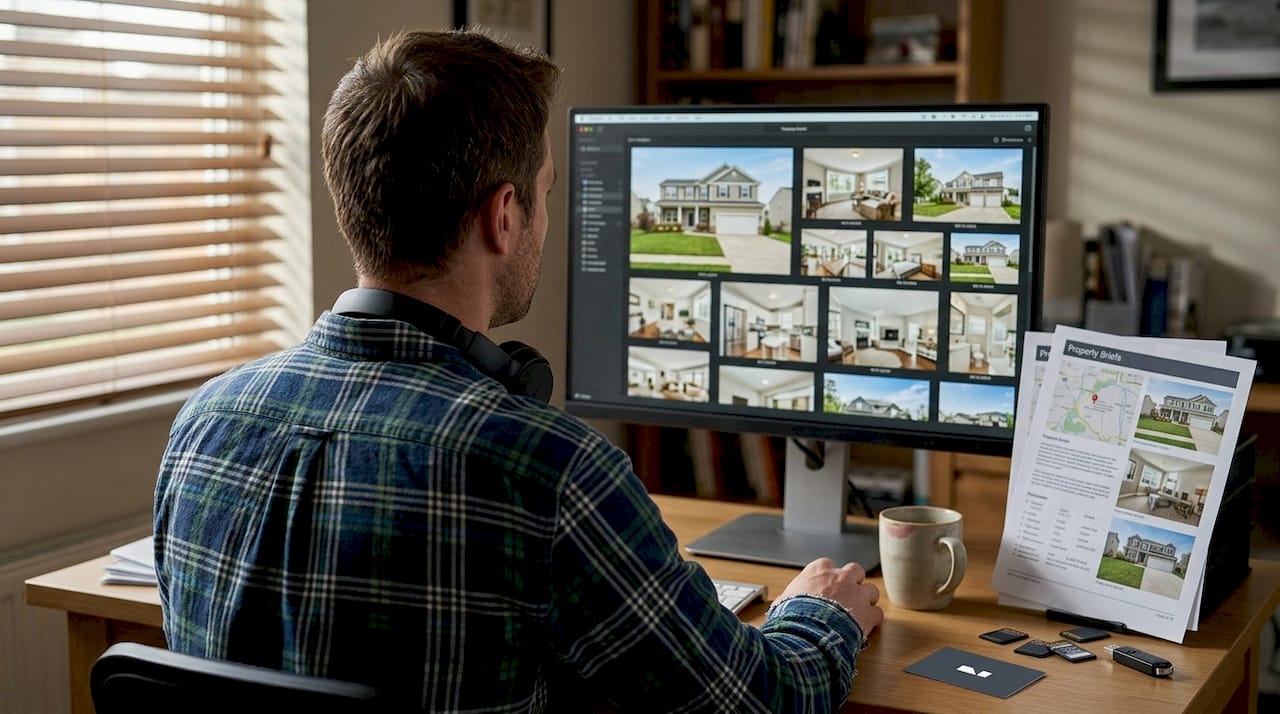
TL;DR:
- Fast photo editing allows real estate listings to launch during peak buyer interest, selling faster.
- AI tools process routine edits quickly, but human review ensures quality for complex scenes.
- Combining AI efficiency with professional judgment optimizes speed without sacrificing image quality.
Speed and quality in photo editing are not enemies. Many real estate agents, interior designers, and homeowners assume that getting edited images back fast means cutting corners, but that assumption is costing them time, money, and competitive edge. The truth is, with the right workflow and AI tools, you can deliver stunning, market-ready property photos in minutes rather than days. This article breaks down what photo editing speed actually means, what drives it, and how you can use it strategically to get your listings noticed and sold faster.
Table of Contents
- What is photo editing speed and why does it matter?
- Factors that determine photo editing speed
- How AI technology accelerates photo editing
- Balancing speed and quality: Best practices for real estate photos
- A fresh perspective on photo editing speed in property marketing
- Instant AI photo editing for your next listing
- Frequently asked questions
Key Takeaways
| Point | Details |
|---|---|
| Speed and quality balance | Photo editing speed matters, but must be balanced with image quality for the best property presentation. |
| AI strengths and limits | AI-powered editing excels in standard, repeatable tasks but may need human input for complex or creative changes. |
| Workflow enhancements | Adopting batch workflows and pre-set templates can dramatically accelerate turnaround times without sacrificing consistency. |
| Market advantages | Faster edits mean quicker listings, helping agents and owners stand out in competitive markets. |
What is photo editing speed and why does it matter?
Photo editing speed refers to the total time between receiving raw images and delivering polished, final photos ready for use. For a real estate agent, that window might mean the difference between launching a listing on a Thursday afternoon when buyer traffic peaks, or missing the weekend rush entirely. For an interior designer, it could mean getting client approval in one meeting instead of three.
The advantages of fast photo editing go well beyond convenience. Property markets move fast. Homes that hit listing platforms with professional photos within 24 hours of going live attract significantly more attention than those with delayed or low-quality visuals. Speed is a strategic asset.
Here are the main reasons photo editing speed matters for your work:
- Short market windows: Buyer interest peaks in the first 48 to 72 hours after a listing goes live.
- Client expectations: Designers and agents who deliver fast build stronger reputations and get more referrals.
- Competitive advantage: In crowded markets, the agent with ready-to-go visuals wins the click.
- Iteration speed: Homeowners planning renovations need to visualize options quickly to make decisions.
Several factors influence how fast edits get done, including whether you use manual or AI editing, how many images need processing, and how complex the enhancements are. Photo editing for home staging is a great example where speed directly impacts sale outcomes.
Pro Tip: Set up a consistent photo brief before every shoot. When your raw images arrive in a predictable format, editing time drops dramatically regardless of whether you use AI or manual tools.
One important distinction: AI tools excel at batch standard edits like HDR merging and sky replacement, processing dozens of images in the time it takes a human editor to finish one. That is not a small advantage. That is a workflow revolution.
Factors that determine photo editing speed
Not all editing jobs are created equal. Understanding what slows things down helps you build a faster, smarter workflow. Here are the five biggest factors that affect your turnaround time:
- Editor skill and experience: A seasoned editor works faster because they have preset workflows, keyboard shortcuts, and an eye for what needs fixing immediately.
- Software choice: AI-powered platforms process images in seconds. Traditional software like Photoshop requires manual adjustments for every image.
- Edit complexity: Swapping a gray sky for a blue one is fast. Correcting complex interior lighting with multiple sources takes much longer.
- Batch vs. single image processing: Editing 20 photos one at a time is slow. Batch processing with consistent settings cuts that time by 60 to 80 percent.
- Revision cycles: Every round of client feedback adds time. Clear briefs and approval checkpoints reduce unnecessary back-and-forth.
Here is a direct comparison to help you decide which approach fits your project:
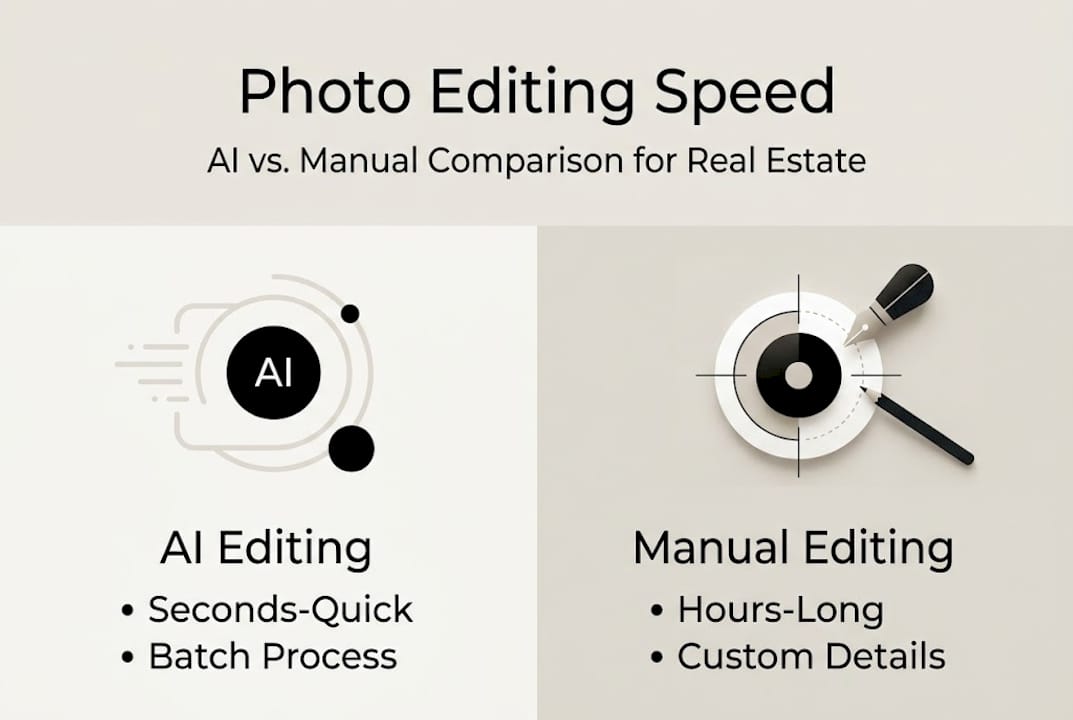
| Factor | AI editing | Human editing |
|---|---|---|
| Average turnaround | Seconds to minutes | Hours to days |
| Error rate (standard edits) | Low | Low to medium |
| Complexity handling | Limited for unique scenes | High |
| Consistency across batch | Very high | Variable |
| Cost per image | Low | Medium to high |
As the quick AI editing steps process shows, AI tools are purpose-built for the repetitive, high-volume work that slows human editors down. But professional photo editing speed still relies on human judgment for anything outside the standard playbook.

Pro Tip: Create batch templates for your most common edit types, such as bright and airy living rooms or warm-toned kitchens. Apply them across an entire shoot in one click, then fine-tune only the outliers.
AI struggles with complex lighting or unique creative requests, but for the 80 percent of edits that are routine, it is unbeatable.
How AI technology accelerates photo editing
AI photo editing tools work by recognizing patterns in images and applying corrections based on trained models. They do not guess. They have processed millions of property photos and learned what good looks like for real estate and interior contexts specifically.
Here is what AI handles instantly versus what still benefits from a human touch:
AI handles instantly:
- Brightness and contrast correction
- Sky replacement
- Color temperature balancing
- Lens distortion correction
- Virtual decluttering and object removal
- Window glare reduction
Better with human oversight:
- Rooms with multiple competing light sources
- Highly stylized or editorial design shots
- Custom brand color matching for luxury listings
- Emotional storytelling through composition adjustments
“AI can outperform humans in speed but may overcorrect or misread unusual scenes, which is why a final human review remains valuable for complex or high-stakes images.”
The AI photo visualization benefits extend beyond speed. AI tools understand spatial relationships, so when you describe a change in natural language, such as “make this room feel brighter and more modern,” the tool interprets design intent, not just pixel values.
For real estate professionals, this means you can go from raw shoot to listing-ready gallery without touching a single slider manually. For designers, it means showing clients three different color palettes for the same room in the time it used to take to prepare one. Explore AI solutions for rapid editing to see how this translates into real workflow gains.
The practical impact is significant. A listing agent who once waited two days for edited photos can now have them ready before leaving the property after the shoot.
Balancing speed and quality: Best practices for real estate photos
Speed without quality is just noise. The goal is not to edit fast for its own sake. It is to deliver images that make buyers stop scrolling and want to see the property in person. Here is how to get both.
Prioritize speed when:
- You have a large batch of standard shots with consistent lighting
- The listing needs to go live within 24 hours
- Images require routine corrections like brightness, color, or sky swaps
- You are creating multiple visual options for a client to choose from
Slow down and invest more time when:
- The property is a luxury or high-value listing where every detail matters
- Lighting conditions during the shoot were unusual or challenging
- The client has specific brand or style requirements
- Images will be used in print marketing or editorial features
Properties with professionally edited photos sell 32 percent faster than those without, and quickly returned photos keep that momentum going from day one. Waiting three days for edited images while your listing sits unclicked is an invisible but very real cost.
Common pitfalls to watch out for:
- Overcorrection: AI tools can over-brighten interiors, making them look artificial. Always check shadows and highlights.
- Skipping review: Even the best AI misreads a scene occasionally. A 60-second review before uploading saves you from embarrassing errors.
- Ignoring context: A fast edit that does not match the property’s actual feel misleads buyers and creates friction at viewings.
Pro Tip: Always do a final review of AI-generated edits before submitting to a listing platform or client. Look specifically at window areas, mirrors, and any reflective surfaces where AI corrections tend to go wrong.
For batch work, AI is best for standard edits, while anything requiring a unique creative touch still benefits from manual attention.
A fresh perspective on photo editing speed in property marketing
Here is something most articles on this topic will not tell you: obsessing over speed can actually hurt your results. We have seen agents rush AI-edited photos to listing platforms only to have buyers show up expecting a bright, airy space and find a dark, dated one. The mismatch damages trust and wastes everyone’s time.
Speed is a competitive advantage only when it is paired with accuracy. The smartest workflow is not the fastest one. It is the one that gets you professional results reliably, every time, without requiring a full manual review of every pixel.
AI is a powerful tool, but it is not a replacement for creative judgment. The agents and designers who win in crowded markets are not just the fastest. They are the ones who use quality photo enhancement tips to blend AI efficiency with a trained eye for what actually sells a space.
Pro Tip: Build a two-step workflow. Let AI handle the heavy lifting on batch corrections, then spend five minutes on a human review pass. You get 90 percent of the speed benefit with 100 percent of the quality control.
Instant AI photo editing for your next listing
You now have a clear picture of what drives photo editing speed and how to use it without sacrificing quality. The next step is putting that knowledge into action with a tool built specifically for property and interior photos.

VibeMyFlat lets you describe exactly what you want in plain language and delivers professional-quality edits in under 30 seconds. Whether you are a real estate agent preparing a batch of listing photos, a designer showing a client three room variations, or a homeowner visualizing a renovation, VibeMyFlat makes the process fast, intuitive, and effective. No complex software, no steep learning curve. Just results that get your property noticed and help it sell.
Frequently asked questions
How fast can AI edit real estate photos?
AI tools can process standard real estate photos in seconds to a few minutes per batch, far faster than manual editing. For routine tasks like HDR merge and sky replacement, AI is essentially instant.
Does faster photo editing reduce image quality?
Not necessarily. AI handles standard edits well and consistently, but manual review is still important for complex scenes. As noted in testing, AI may overcorrect or misread unusual scenes, so a quick human check keeps quality high.
When should you use manual editing instead of AI for photos?
Use manual editing when images have unique lighting conditions, custom creative requirements, or when precise brand control matters. AI struggles with complex lighting and highly specific requests that fall outside standard property photography.
What is the main benefit of quick photo editing for property listings?
Quick photo editing gets your listing live during peak buyer traffic windows, helping properties attract more interest and sell faster. The first 48 to 72 hours after a listing goes live are the most critical for visibility.