What Is Virtual Staging? A Real Estate Guide
What Is Virtual Staging? A Real Estate Guide

TL;DR:
- Virtual staging digitally adds furniture and decor to property photos using AI software, making listings more appealing online. It is faster and more cost-effective than traditional staging, with legal disclosure required. Properly prepared photos are essential for realistic and effective virtual staging.
Virtual staging is defined as the digital process of adding realistic, computer-generated furniture and decor to photos of empty or outdated properties using specialized software. Unlike traditional staging, which requires renting physical furniture and coordinating on-site setup, virtual staging happens entirely on a screen. The National Association of REALTORS® reports that 100% of buyers now use the internet during home searches, which makes listing photos the most critical marketing asset a seller owns. Understanding what is virtual staging, how it works, and when to use it gives you a real edge in a competitive market.
What is virtual staging and how does it work?
Virtual staging is a digital technique that adds furniture and decor to photos of empty or cluttered properties using specialized software. The result is a photorealistic image that shows buyers exactly how a space could look when furnished and lived in. The process starts with high-quality photos of the empty room. A designer or AI platform then layers in digital furniture, lighting adjustments, rugs, artwork, and accessories to create a finished interior scene.

The role of AI in modern virtual staging
AI-based platforms have changed the speed and cost of the process dramatically. These tools produce realistic room designs within seconds at very low cost, without requiring any design skills from the user. You describe what you want, the AI applies design principles, and the output is a polished, market-ready image. Platforms like Vibemyflat process edits in under 30 seconds using natural language input, meaning you can type “add a mid-century modern sofa and warm lighting” and get a professional result almost instantly.
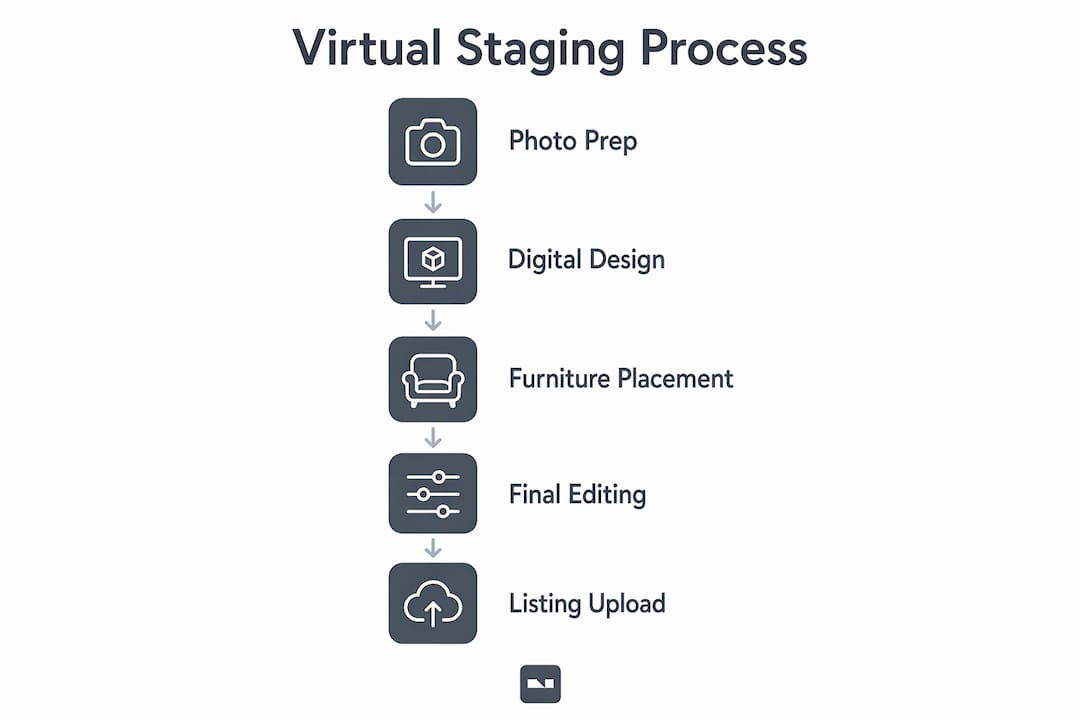
What the process looks like step by step
- Photograph the empty room with good natural light and a wide-angle lens to capture the full space.
- Upload the photo to a virtual staging platform or send it to a professional virtual staging service.
- Select a design style such as modern, Scandinavian, farmhouse, or traditional to match your target buyer.
- Review and request edits to adjust furniture placement, color palette, or decor details.
- Download the finished image and add it directly to your listing, social media, or marketing materials.
Pro Tip: Always photograph rooms after a thorough cleaning and minor repairs. Virtual staging cannot fix structural issues visible in the photo, and a clean base image produces far more realistic results.
What are the benefits of virtual staging compared to traditional staging?
Traditional staging costs thousands of dollars and can take days or weeks to arrange. Virtual staging costs a fraction of that and is completed online, often within 24 hours. The gap in speed and price is not marginal. It is the primary reason property managers, landlords, and individual sellers have shifted toward digital methods.
“Virtual staging helps listings stand out by providing appealing, digitally staged photos suited for online marketing. Since every buyer now starts their search online, the first photo they see determines whether they click through or scroll past.”
The benefits extend well beyond cost savings. Here is how virtual staging outperforms traditional methods across the metrics that matter most:
- Lower cost. Physical furniture rental, delivery, and setup can run $1,000–$5,000 or more per property. Virtual staging typically costs a small fraction of that per room.
- Faster turnaround. A traditionally staged home requires scheduling movers, designers, and photographers across multiple days. Virtual staging delivers finished images within hours.
- Design flexibility. You can create multiple versions of the same room in different styles to appeal to different buyer personas, something physically impossible with traditional staging.
- No logistical headaches. Vacant properties, out-of-state rentals, and homes mid-renovation all benefit from virtual staging because no one needs to enter the property.
- Broader marketing reach. Digitally staged photos work across listing platforms, Instagram, Facebook ads, and email campaigns without any additional production cost.
Virtual staging helps homes with outdated decor or vacant spaces look move-in ready and more inviting. That visual transformation directly improves click-through rates on listings and increases the number of showing requests a property receives.
What are the common challenges and limitations of virtual staging?
Virtual staging is less effective for physical showings compared to physical staging. When a buyer walks into a vacant room after seeing a beautifully staged photo online, the disconnect can feel jarring. Managing that expectation is one of the most important practical challenges in using virtual staging well.
The other major challenge is disclosure. Legal considerations require clear communication that listing images are digitally enhanced. Failing to disclose virtual staging can mislead buyers and create legal exposure for agents and sellers. Most real estate platforms and state regulations require a visible label or caption on virtually staged photos.
- Buyer skepticism. Some buyers distrust digitally altered images, especially if the staging looks unrealistic or the furniture scale appears off.
- Quality variation. Results depend heavily on the skill of the designer or the capability of the AI platform. Low-quality virtual staging can actually hurt a listing’s credibility.
- Disclosure requirements. Always label virtually staged images clearly. A simple caption like “virtually staged” satisfies most regulatory and platform requirements.
- Photo dependency. The quality of the base photograph sets the ceiling for the final result. Poorly lit or low-resolution photos produce poor virtual staging, regardless of the software used.
- Not a substitute for repairs. Virtual staging cannot hide water stains, damaged flooring, or structural problems. Buyers will notice these during showings.
Pro Tip: When publishing virtually staged photos alongside empty room photos, place the staged version first. Buyers who see the potential before the reality are more likely to schedule a showing.
How to use virtual staging effectively for rentals and home sales
Good photos and style choices that match buyer preferences improve virtual staging effectiveness and make listings more competitive. The preparation you do before staging matters as much as the staging itself. A well-lit, decluttered room gives the AI or designer the best possible canvas to work with. For a detailed walkthrough on getting interiors photo-ready, the interior prep guide from Vibemyflat covers the full process.
For rental properties specifically, virtual staging impacts cash flow and risk exposure by reducing the time a unit sits vacant. A well-staged listing attracts more qualified applicants faster, which directly reduces the cost of vacancy. Documenting your virtual staging process and respecting local disclosure rules protects you legally and builds trust with prospective tenants. For landlords managing multiple units, the apartment staging guide offers practical strategies tailored to that workflow.
Combining virtual staging with professional photo editing produces the strongest results. The table below shows how different approaches compare across the factors that matter most for listings.
| Factor | Virtual staging only | Virtual staging with photo editing |
|---|---|---|
| Cost | Low | Low to moderate |
| Turnaround time | Hours | Hours to 1 day |
| Image quality | Good | Excellent |
| Flexibility | High | Very high |
| Best use case | Vacant properties | All property types |
For home sales, selecting a design style that matches your neighborhood’s buyer demographic increases engagement. A modern minimalist style works well in urban condos. A warm, traditional look performs better in suburban family homes. Integrating virtually staged images into your property listing photos and social media ads multiplies their reach without adding production cost.
If you want to go deeper on design inspiration, the home staging inspiration list covers current styles that are performing well in 2026. For renovation planning, digital design tools from specialists like HMJ Contracting show how virtual visualization connects to real-world design decisions.
Key Takeaways
Virtual staging is the most cost-effective and flexible way to make property photos compelling for online buyers, and disclosure, photo quality, and style matching determine whether it works.
| Point | Details |
|---|---|
| Virtual staging definition | It digitally adds furniture and decor to property photos using software or AI. |
| Cost and speed advantage | Virtual staging costs far less than traditional staging and delivers results within hours. |
| Disclosure is required | Always label virtually staged images clearly to meet legal and platform requirements. |
| Photo quality sets the ceiling | A clean, well-lit base photo is the single biggest factor in virtual staging quality. |
| Rental properties benefit most | Reducing vacancy time through better listings directly improves cash flow for landlords. |
Why virtual staging is the most underused tool in real estate marketing
Most sellers and landlords still treat listing photos as an afterthought. That is a costly mistake. The National Association of REALTORS® data makes the case plainly: every single buyer uses the internet during their home search. The photo is the first showing. If it does not create an emotional response, the buyer moves on in seconds.
What surprises me most is how many property owners invest in professional photography but then publish photos of empty rooms. A beautiful photo of an empty space tells a buyer almost nothing about how the home will feel to live in. Virtual staging fills that gap at a fraction of the cost of physical staging, and the results are often indistinguishable from the real thing when done well.
The technology has matured faster than most people realize. AI platforms now produce results that would have required a professional 3D designer just three years ago. The remaining barrier is not technical. It is awareness. Sellers who understand what virtual interior staging can do, and who use it consistently, outperform those who do not. The data on buyer behavior supports this, and so does the growing adoption among top-performing agents.
My honest recommendation: test it on one listing before committing to a full workflow. The difference in engagement is usually visible within the first week.
— Hello
Vibemyflat makes virtual staging fast and accessible
Property photos that show empty rooms leave buyers guessing. Vibemyflat gives you a faster way to change that.

Vibemyflat is a web-based platform and mobile app that uses AI to edit and enhance interior photos in under 30 seconds. You describe the changes you want in plain language, and the platform applies them with professional-quality results. No design skills required. Whether you are a property manager staging vacant units, a homeowner preparing to sell, or a real estate agent managing multiple listings, Vibemyflat handles the virtual room staging process from a single interface available on iOS, Android, and desktop. The result is listing-ready photos that give buyers a clear, compelling picture of what a space can be.
FAQ
What is the virtual staging definition in real estate?
Virtual staging is the digital process of adding computer-generated furniture and decor to property photos using specialized software. It creates photorealistic images of furnished spaces without physically moving any furniture.
How much does virtual staging cost compared to traditional staging?
Traditional staging can cost thousands of dollars per property, while virtual staging typically costs a small fraction of that per room. The exact price varies by platform and service level.
Do I need to disclose virtual staging on my listing?
Yes. Most real estate platforms and state regulations require a clear label on virtually staged images, such as “virtually staged.” Failing to disclose can mislead buyers and create legal liability.
Is virtual staging effective for rental properties?
Virtual staging is highly effective for rental properties because it reduces vacancy time by making listings more visually appealing online. Faster tenant placement directly improves cash flow for landlords.
What makes a good base photo for virtual staging?
A clean, well-lit room photographed with a wide-angle lens produces the best virtual staging results. Poor lighting or low resolution limits what any software or designer can achieve with the image.